1. Using the wrong potato
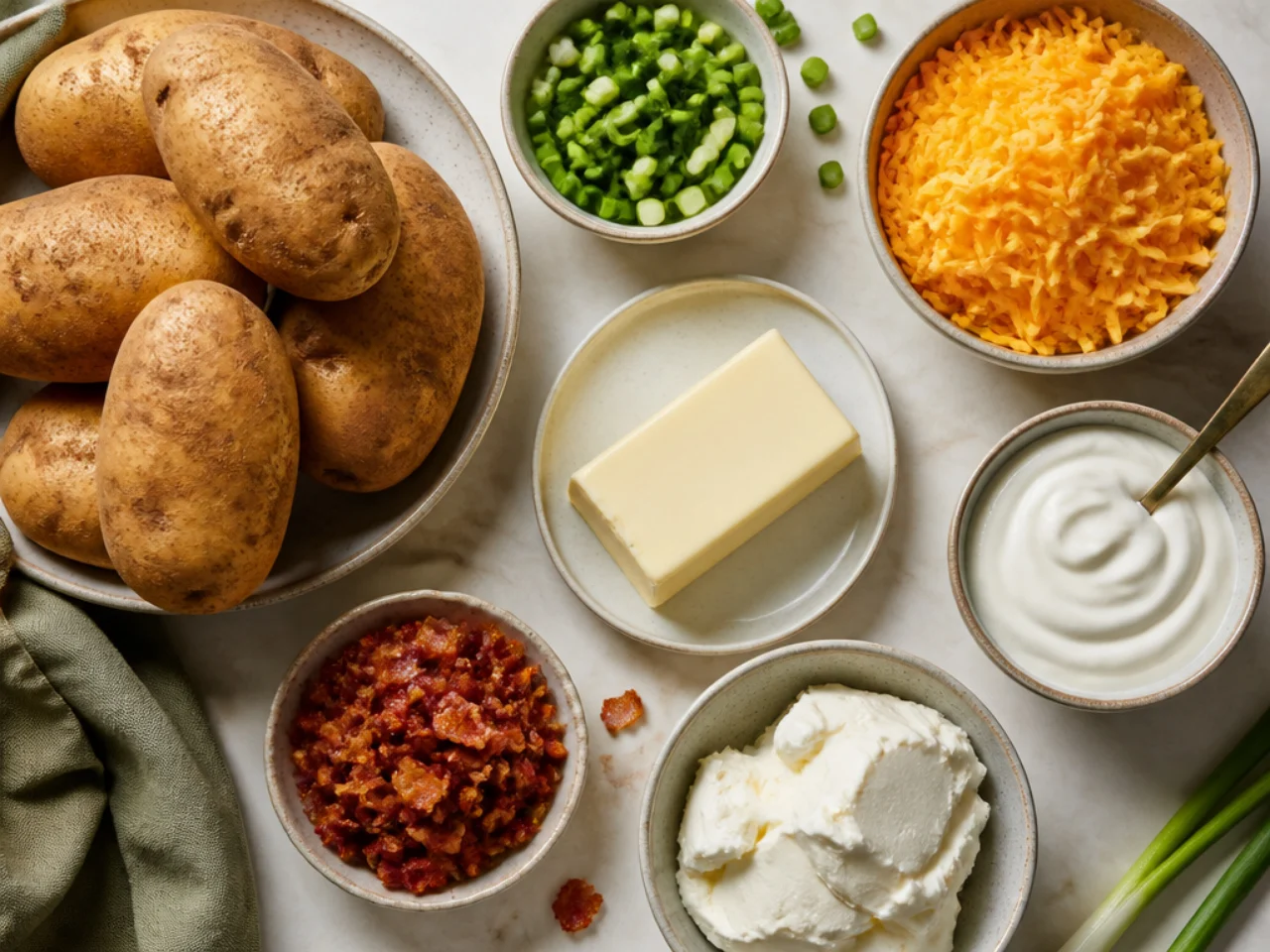
Waxy potatoes like red or new potatoes stay dense and gummy when mashed, so the filling never turns fluffy. Reach for high-starch russets instead, since their loose, mealy flesh whips up light and creamy. One large russet per person is the sweet spot for a hearty, sturdy shell.
2. Skipping the second bake
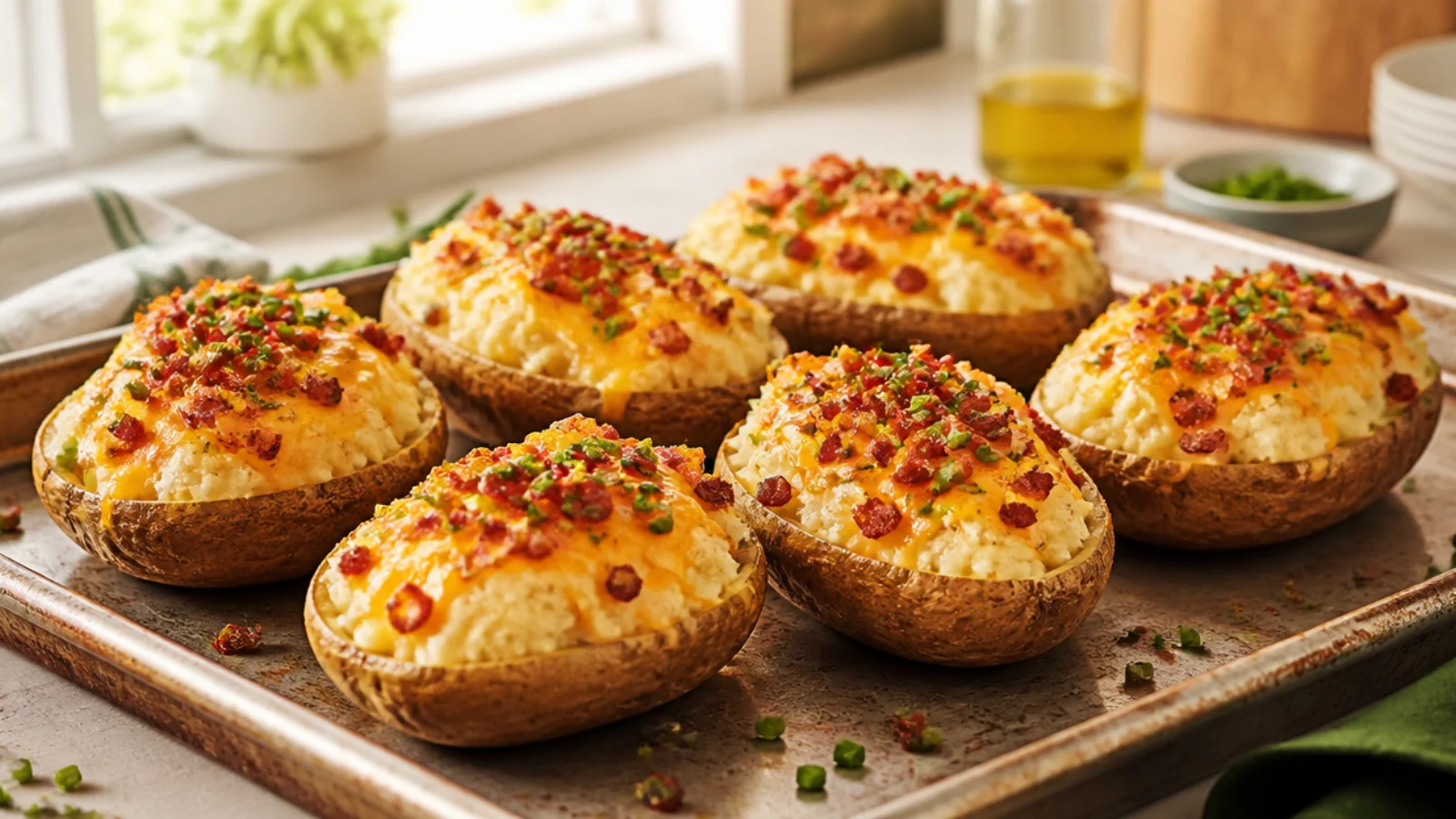
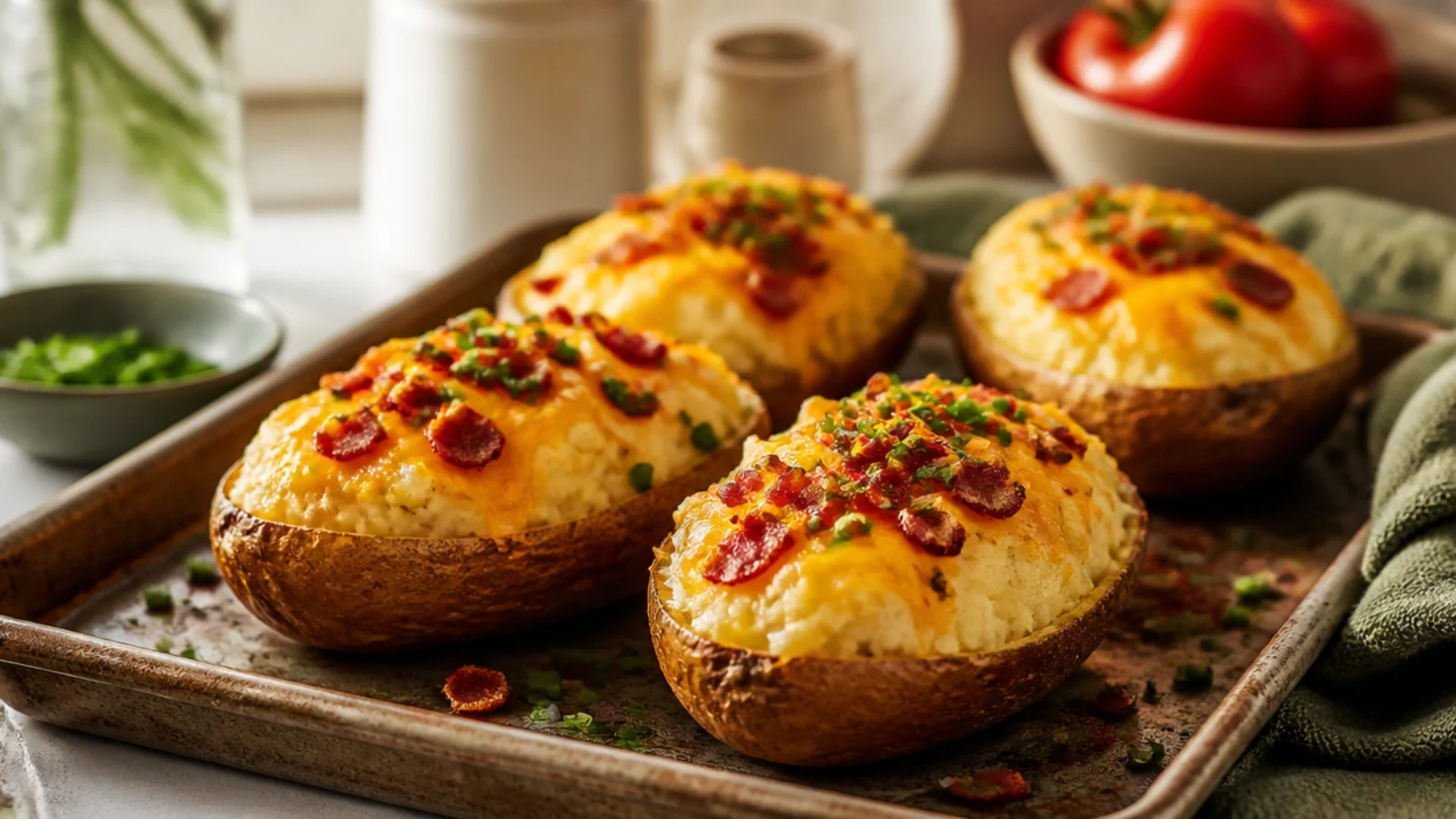
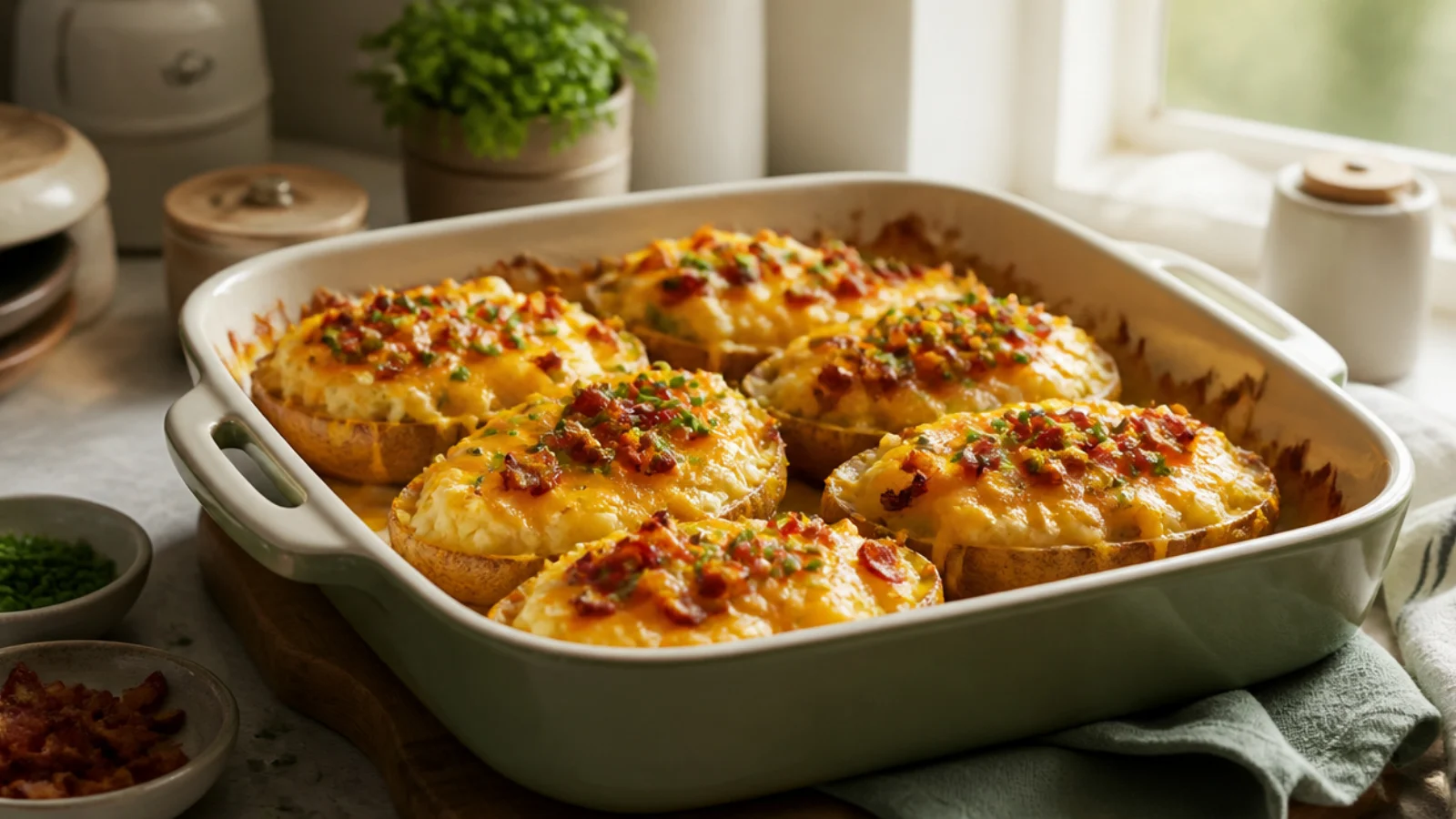
Stuffing the shells and calling it done leaves you with lukewarm potatoes and a soft, pale top. That second trip to the oven is what melts the cheese, warms the filling through, and crisps the edges into golden ridges. Give them 15 to 20 minutes at 400 degrees so the tops turn burnished and irresistible.
3. Not baking the potatoes long enough
Pulling the potatoes early means a firm center that fights the fork and refuses to mash smoothly. Bake whole russets until a knife slides in with zero resistance, usually 60 minutes or more depending on size. A fully tender potato scoops clean and mashes into a silky, lump-free filling.
4. Wrapping them in foil to bake
Foil traps steam and leaves you with a soft, damp skin that collapses when you try to fill it. Bake the potatoes naked right on the oven rack so the skins dry out and firm up into sturdy little boats. A quick rub of oil and salt beforehand makes them crackly and flavorful.
5. Scooping out too much flesh
Hollowing the potato down to a paper-thin wall gives you a shell that tears and buckles under the filling. Leave about a quarter inch of flesh attached to the skin so each half holds its shape. That little cushion keeps the boats sturdy and adds a satisfying bite of potato in every forkful.
6. Overmixing the filling
Beating the potato flesh with a mixer or working it too hard breaks down the starch and turns it gluey and paste-like. Mash gently by hand with a fork or ricer until just smooth and creamy. The goal is a fluffy, spoonable filling, not a stretchy, sticky one.
7. Forgetting to season the filling
Potato flesh is bland on its own, so an unseasoned filling tastes flat no matter how much cheese you pile on. Salt generously and add pepper, garlic powder, or a pinch of onion powder while the filling is still warm and absorbing flavor. Taste as you go, since a well-seasoned base makes everything on top shine.
8. Adding cold butter and dairy
Stirring in fridge-cold sour cream or a hard pat of butter cools the filling fast and leaves streaky, unmelted lumps. Let your butter soften and take the chill off the sour cream and milk first so everything blends into a smooth, glossy mash. Warm dairy folds in evenly and keeps the filling luscious.
9. Drowning the filling in liquid
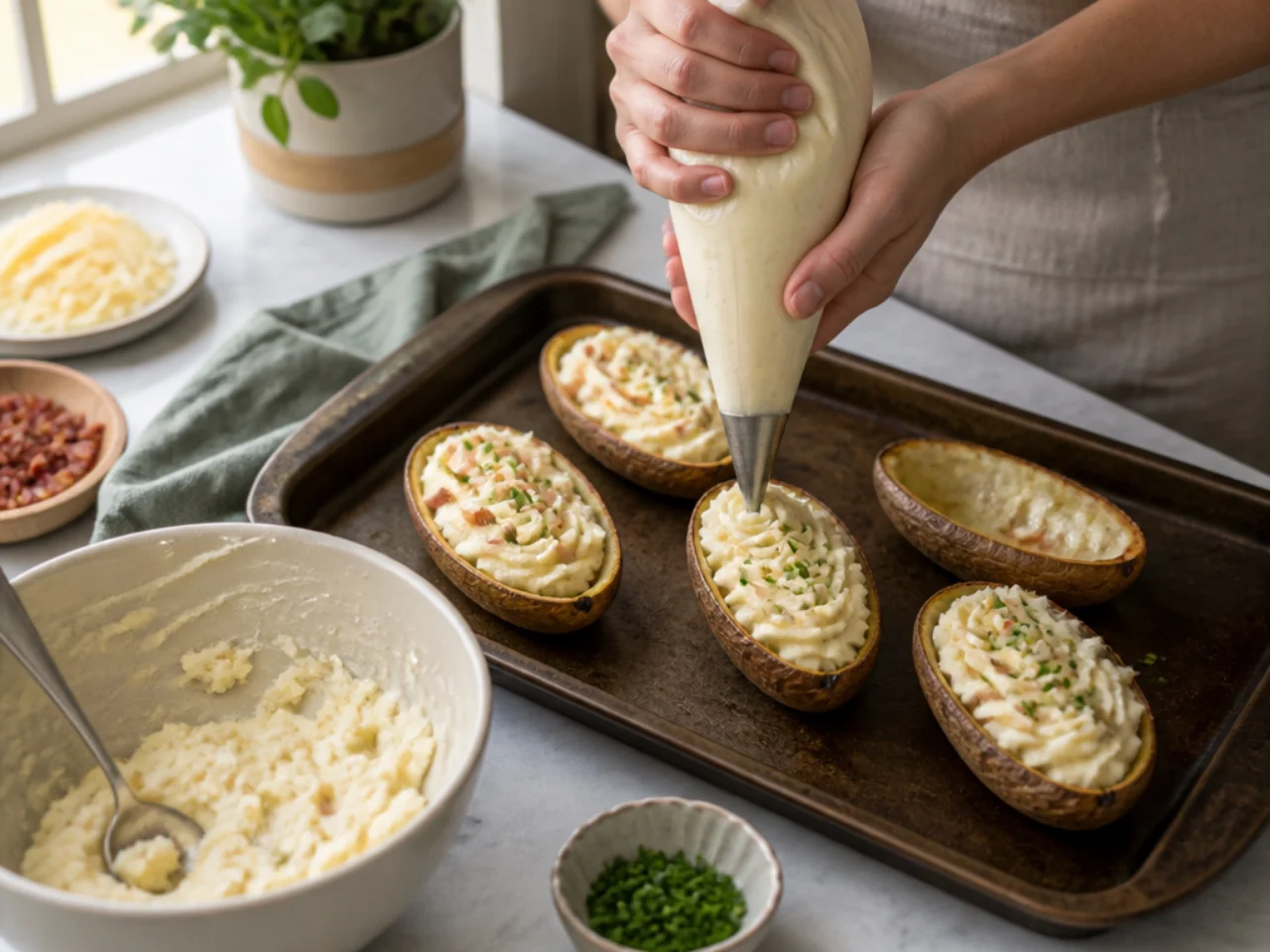
Pouring in too much milk or cream to loosen the mash leaves a soupy filling that slumps out of the shells. Add dairy a splash at a time and stop once the mixture is creamy but still holds its shape on a spoon. A thicker filling pipes into neat mounds and browns beautifully on top.
10. Using pre-shredded cheese
Bagged shredded cheese is coated with anti-caking starch that keeps it from melting into that gooey, stretchy pull everyone loves. Grate a block of sharp cheddar or gruyere yourself for a filling that turns silky and a top that bubbles. Freshly grated cheese also tastes noticeably richer and melts far more evenly.
11. Overstuffing until they overflow
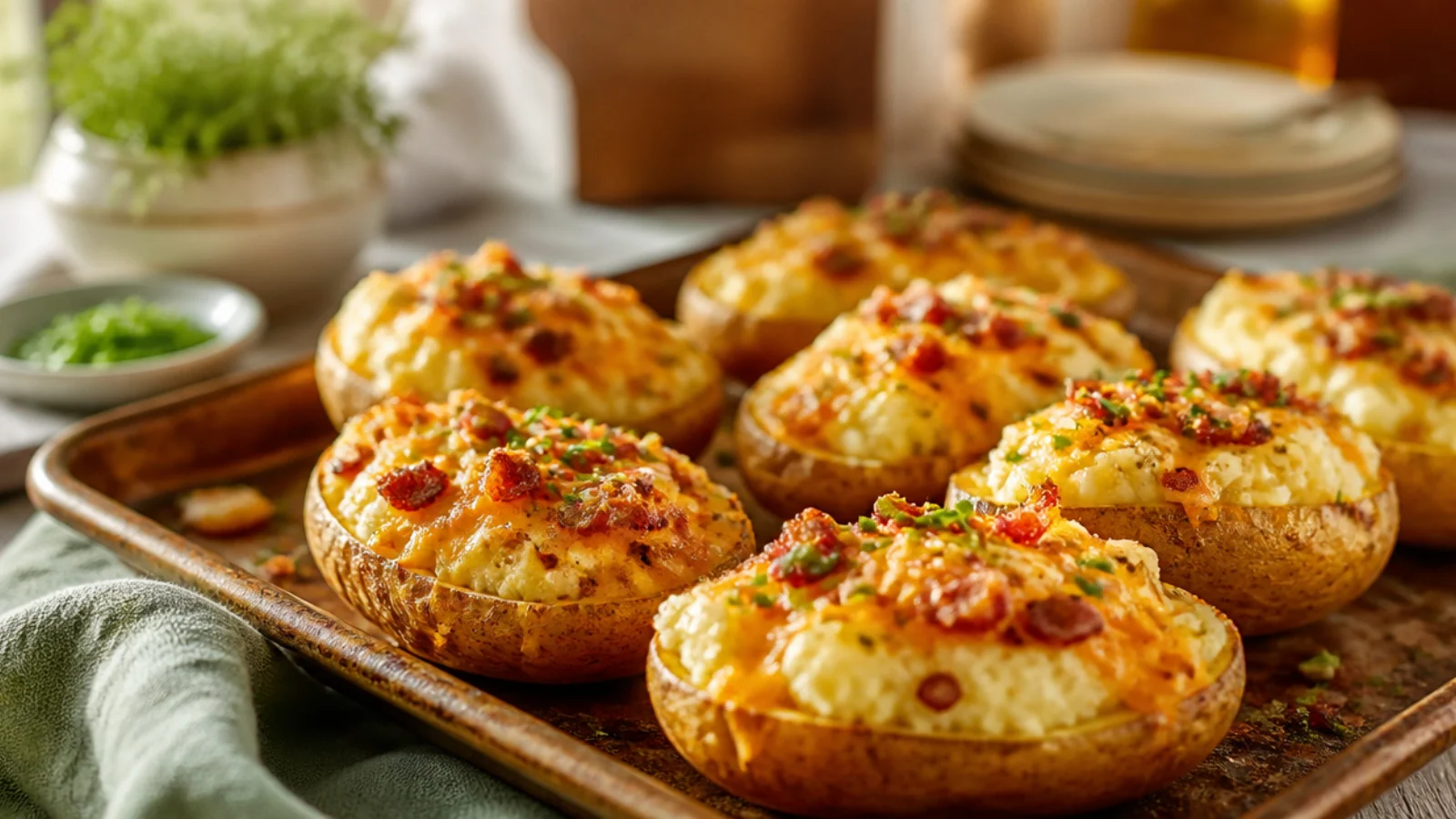
Mounding the filling sky-high feels generous, but it spills over the edges and bakes into a scorched mess on the pan. Fill the shells to a gentle dome and save any extra for a second round or a small ramekin on the side. A tidy fill browns cleanly and holds together when you lift each half.
12. Adding bacon too early
Folding crumbled bacon into the filling before the second bake steams it soft and strips away every bit of crunch. Stir most of it in for flavor, but scatter a handful over the top only in the last few minutes so it stays crisp. That final sprinkle gives each bite a smoky, salty snap against the creamy potato.
13. Crowding the pan too tightly
Packing the stuffed halves shoulder to shoulder traps steam between them and keeps the tops from crisping and coloring. Space them out on the sheet with a little room around each one so hot air circulates freely. Well-spaced potatoes come out with golden, craggy tops instead of pale, damp ones.
14. Serving them lukewarm
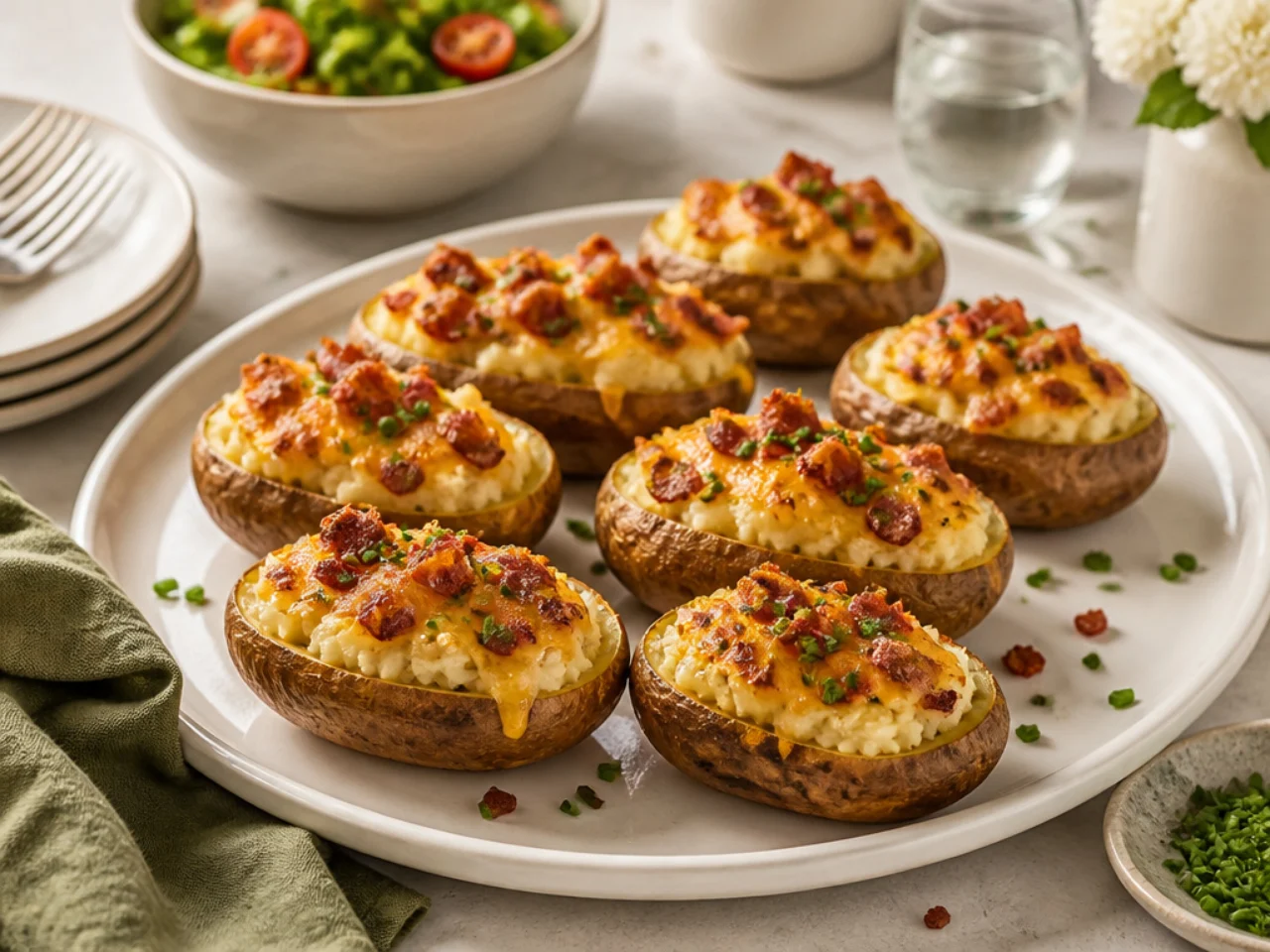
Twice baked potatoes lose their magic as they cool, turning dense and heavy the longer they sit on the counter. Serve them straight from the oven while the cheese is molten and the edges are still crackling. If you need to hold them, keep them warm in a low oven and add fresh chives right before they hit the table.
15. Skipping fresh toppings at the end
Sending them out with nothing but the baked filling makes the plate look and taste one-note. A shower of sliced green onions, a dollop of cool sour cream, or a scatter of fresh chives adds color, brightness, and a lift that cuts the richness. That finishing touch takes ten seconds and makes every potato look restaurant-worthy.